
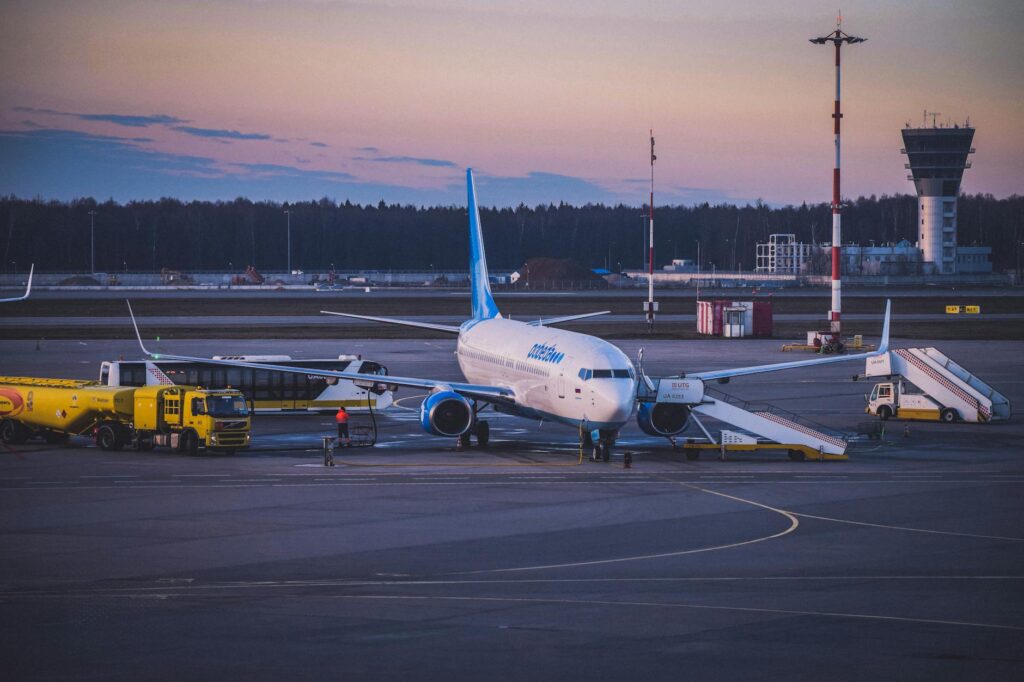

The Fuel Powering Aviation’s Biggest Shift
Walk through any major aviation conference right now and you’ll hear one term more than anything else: SAF. Sustainable Aviation Fuel has gone from a niche talking point to the centerpiece of nearly every airline’s climate strategy. And honestly, it’s about time the industry started taking this seriously.
For years, aviation’s carbon problem sat in a kind of awkward silence. Flying accounts for roughly 2.5% of global CO2 emissions, which sounds small until you factor in other non-CO2 effects at altitude. The real number, in terms of total climate impact, is closer to 3.5% of all human-caused warming. Not insignificant. And unlike cars or trucks, you can’t just slap a battery pack on a 787 and call it a day. The physics don’t work. So SAF became the most realistic path forward, and suddenly everyone from United Airlines to Airbus is betting big on it.
What SAF Actually Is (No Jargon, I Promise)
Here’s the thing. A lot of people assume sustainable aviation fuel is some exotic space-age substance. It’s not. SAF is produced from things like used cooking oil, agricultural waste, municipal solid waste, and even captured carbon. It can be blended with conventional jet fuel and burned in existing aircraft engines with zero modifications required. That last part is huge. Airlines don’t need to replace their fleets to start using it.
Current regulations allow SAF blends of up to 50% with conventional Jet-A fuel, though fully certified 100% SAF flights have already happened in test conditions. In February 2023, Virgin Atlantic flew a Boeing 787 from London to New York on 100% SAF, a milestone that got less attention than it deserved. The flight proved the technology works. Now the challenge is scale and cost.
The Cost Problem Is Real, But It’s Shrinking
Let’s be honest about the elephant in the room. SAF is expensive. Right now, it costs anywhere from two to five times more per gallon than conventional jet fuel depending on feedstock and production method. For an industry that operates on razor-thin margins, that’s a serious barrier. A single wide-body flight can burn through 50,000 to 100,000 pounds of fuel. The math gets uncomfortable fast.
But here’s what’s changing. Government incentives, especially in the US under the Inflation Reduction Act, are offering tax credits of up to $1.75 per gallon for SAF producers. The EU has mandated that by 2025, at least 2% of aviation fuel used at European airports must be SAF, rising to 70% by 2050. These aren’t suggestions. They’re legal requirements. That kind of regulatory pressure is forcing investment into production capacity, and as production scales up, costs will come down. That’s how every new energy technology has worked historically.
Airlines Are Already Moving
United Airlines has been one of the most aggressive players here. They’ve committed to purchasing over 3 billion gallons of SAF over the coming decades and invested directly in SAF producers including Fulcrum BioEnergy. Delta, Lufthansa, and Japan Airlines have all signed significant offtake agreements too. Even smaller regional carriers are starting to integrate SAF into their fuel planning.
On the manufacturer side, Airbus and Boeing have both committed to certifying their aircraft for 100% SAF use by 2030. Rolls-Royce successfully tested its Pearl 700 engine on 100% SAF back in 2021. The technology is ready. Infrastructure and economics are the remaining hurdles, and both are improving faster than most people expected.
What This Means If You’re Learning to Fly
In my view, this is the most underrated aspect of the SAF conversation: what it means for student pilots and general aviation. The GA community runs on avgas, mostly 100LL, which still contains lead. Swift Fuels and GAMI have both developed unleaded alternatives, and the FAA approved GAMI’s G100UL for use in all piston aircraft back in 2022. That’s a significant step. The shift toward cleaner fuels isn’t just happening at 35,000 feet. It’s coming to your local airfield too.
If you’re a student pilot right now, you’ll likely be training on cleaner fuel within the next few years. And if you pursue a career in aviation, SAF will be part of your world in a very real way. Understanding how fuel planning works, how range and burn rates are affected by fuel type and conditions, and how to think about efficiency will matter more, not less, as the industry evolves.
The Road Ahead
The goal most airlines and regulators have rallied around is net-zero aviation by 2050. Whether that’s achievable is genuinely debated. SAF alone probably can’t get us there without continued improvements in airframe efficiency, air traffic management, and potentially some role for hydrogen or electric propulsion on shorter routes. But SAF is the bridge. It’s the thing that works right now, in aircraft that already exist, on routes that already operate.
That’s not nothing. That’s actually a lot.
If you’re deep in flight planning and want to get your fuel numbers dialed in, our Fuel Burn Estimator is a handy free tool that helps you estimate trip fuel, reserve, and taxi fuel for any aircraft. Try it free and save yourself some headache on your next cross-country.