Dubai International: The Airport That Never Sleeps
You land at 2am, half the world is still awake around you, and the terminal smells like oud and fresh coffee. That’s Dubai International Airport in a nutshell. DXB is not just a big airport. It’s a city within a city, and if you don’t know how it works, it will absolutely swallow you whole.
Let’s be honest. DXB regularly handles over 86 million passengers a year, making it one of the busiest international airports on the planet. It’s the home base for Emirates, one of the most operationally complex airlines in the world, and it connects more international destinations than almost any other single hub. Whether you’re transiting, flying in for business, or catching a connection to somewhere further east, knowing your way around this place is genuinely useful knowledge.
The Terminals: Don’t Get This Wrong
This is where most people go wrong. Dubai International has three terminals, and they are not connected airside. If you’re transiting between Terminal 1 and Terminal 3, you need to clear immigration, grab your bags, and transfer landside. That’s not a short walk. That’s a whole process.
Terminal 1 handles most non-Emirates international carriers. You’ll find flydubai here too, along with a solid mix of Asian, African, and European airlines. It’s functional and modern, though nothing particularly flashy.
Terminal 2 is the quieter one. Smaller regional carriers and charter operations tend to use it. If you haven’t specifically been told you’re departing from T2, you’re probably not.
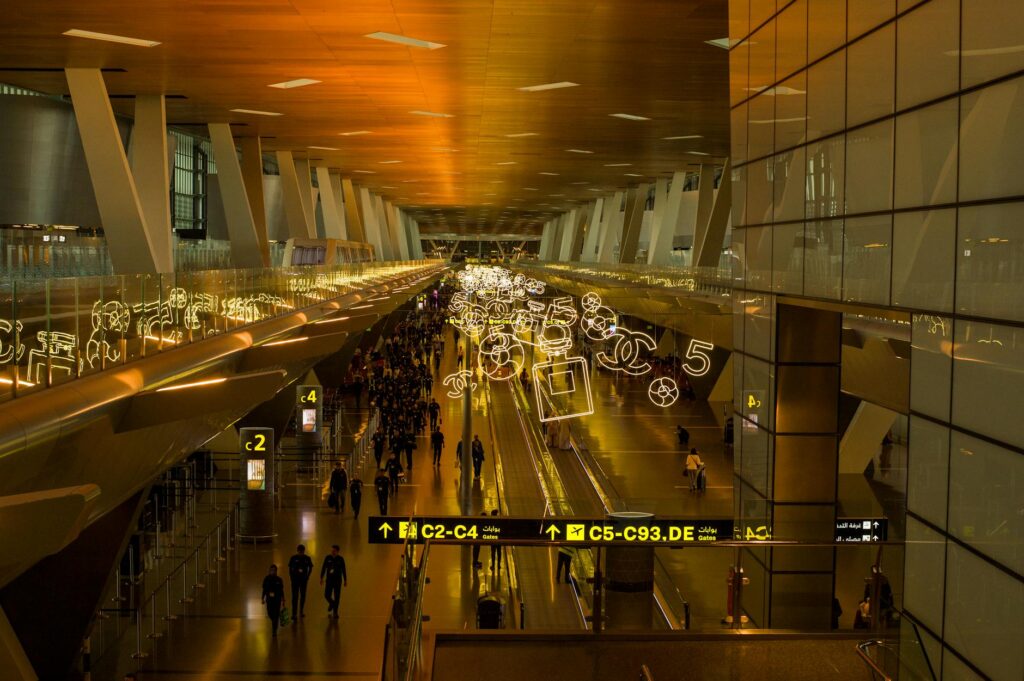
Terminal 3 is the Emirates terminal, and it’s enormous. We’re talking one of the largest airport terminals in the world by floor space, with dedicated concourses A, B, and C spread across millions of square feet. Concourse A handles the A380 fleet almost exclusively, and walking from one end to the other is genuinely a 20-minute exercise if you’re not careful about which gate you’re heading to.
Lounges Worth Your Time (and a Few That Aren’t)
Honestly, the lounge game at DXB is strong. Emirates First Class and Business Class passengers get access to the Emirates Lounges, which are genuinely world-class. The First Class lounge in Concourse B has a spa, a la carte dining, and shower suites that feel more like a hotel than an airport. If you’re ever in a position to experience it, don’t rush through it.
For everyone else, the Marhaba Lounge is the most widely accessible paid or Priority Pass option. It’s decent. Good food, reliable wifi, quieter than the main terminal. The Ahlan lounge in Terminal 1 gets the job done too, especially if you have a long layover and just want somewhere to sit that isn’t a hard plastic chair near a gate.
One lounge I’d skip is the general Priority Pass offering near the older Concourse C gates. It gets crowded during peak hours and the aircon seems to be perpetually losing a battle with the number of people inside.
Transport Into the City
This is where Dubai actually impresses me. The Dubai Metro Red Line connects directly to the airport at both Terminal 1 (Union Square direction) and Terminal 3, and it runs until around midnight on most nights. The fare from the airport to downtown Dubai is under 10 AED, which is practically nothing. It’s clean, air-conditioned, and reliable. Take it.
Taxis are everywhere outside arrivals. There’s a fixed metered system so you won’t get ripped off, but depending on the time of day, traffic on Sheikh Zayed Road can turn a 20-minute ride into an hour. If you’re arriving during evening rush hour, the Metro wins every time.
Uber and Careem both operate in Dubai. Careem is the regional player and tends to be slightly cheaper for airport pickups in my experience. Either works fine.
Insider Tips That Actually Matter
- Allow at least 90 minutes for a connecting flight at DXB if you’re changing terminals. Two hours is safer.
- The duty-free in Terminal 3 Departures is legitimately good for perfumes and electronics, but the gold souk section near Gate C gates is where things get interesting if you want jewelry.
- Emirates check-in opens 24 hours before departure online. Use it. The queues at the physical counters can be brutal.
- If you’re transiting more than 8 hours, Dubai offers a free visa-on-arrival transit for many nationalities. It’s worth checking if you qualify, because the city is less than 30 minutes away and worth a quick visit.
- There are prayer rooms and quiet zones throughout the terminal. Particularly useful during very long layovers when you just want somewhere genuinely peaceful.
Flying In and Out: A Few Route Notes
DXB sits in an interesting geographic sweet spot. It’s roughly equidistant from London, Sydney, and several major Asian hubs, which is a big part of why it works so well as a transit hub. The flight from London Heathrow to Dubai runs about 7 hours on a good day. Sydney to Dubai is around 14 hours. New York JFK to Dubai with Emirates is usually in the 13 to 14 hour range depending on routing and wind conditions.
In my view, Dubai as a transit hub is genuinely underrated for people flying between Europe and Southeast Asia or Australia. The connections tend to be clean, the aircraft quality is high, and when things work, they really work. When they don’t, the terminal is at least comfortable enough to wait it out.
Plan Your Route Before You Go
If you’re routing through DXB and want to check flight times or estimate fuel for a trip leg, we’ve built some tools that might save you some time. The Flight Time Calculator lets you punch in any two airports and get great-circle distance and estimated flight time instantly. If you’re into the planning side of things, the Fuel Burn Estimator is handy for working out trip fuel and reserves for different aircraft types. Both are free to use over at SkyToolbox.