SkyToolbox

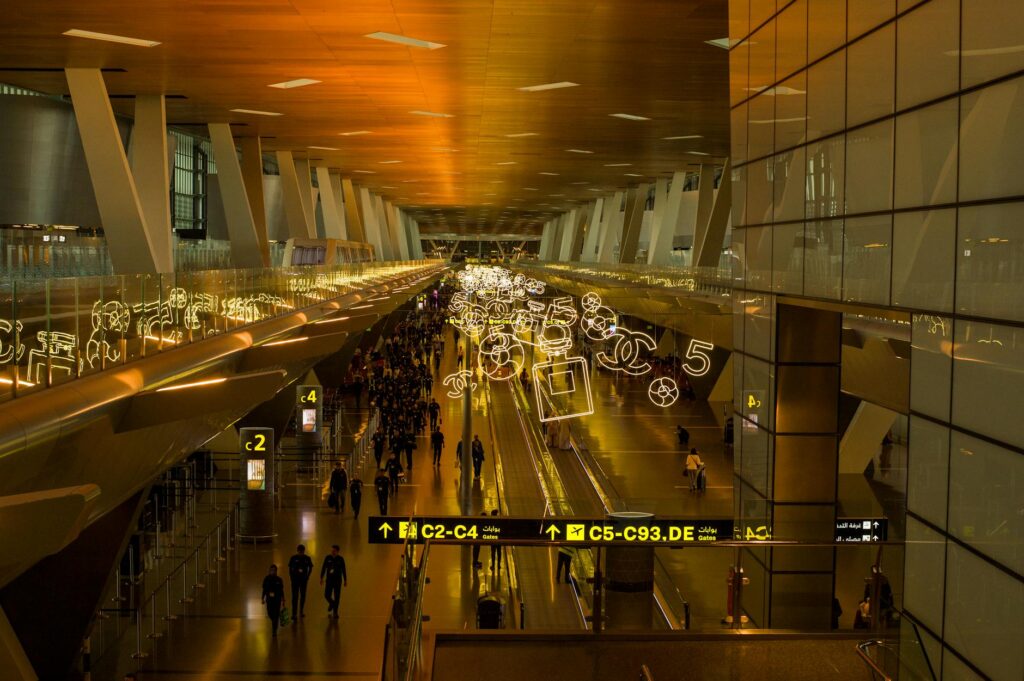
Busy airport terminal featuring modern architecture and vibrant lighting decorations.

Dubai Airport (DXB) Guide: Terminals, Tips & Transit

Picture of Mohib Memon
Mohib Memon

Founder SkyToolbox

You land at Dubai International Airport for the first time and the sheer scale of the place hits you before you’ve even reached the gate. DXB isn’t just a big airport. It’s basically a city with runways attached. As of recent years, it’s consistently ranked as one of the busiest airports in the world by international passenger traffic, handling over 86 million passengers in 2023 alone. That number is staggering, and it shows.

Whether you’re transiting through on an Emirates connection, catching an Air Arabia flight out of the older terminal, or arriving for the first time in the UAE, knowing your way around DXB in advance will save you a lot of stress. Let’s walk through it properly.

Terminal 1, 2, and 3: Know Before You Go

Here’s the thing most travelers get wrong. They assume DXB is one big connected building, and you can just wander between airlines. You can’t, at least not without going through security again in some cases, and the terminals are not all directly connected airside.

Terminal 3 is the big one. It’s exclusively for Emirates, and it’s enormous. T3 has two concourses, A and B, connected by an internal transit train. Concourse A handles the A380 gates, and if you’ve never walked through that concourse before, expect to be genuinely impressed. The ceilings are high, the shops are endless, and you’ll probably walk further than you planned just looking for your gate.

Terminal 1 serves most other international carriers, including Qantas, British Airways, Lufthansa, and many others. It’s older than T3, a bit more worn around the edges, but still functional and well-staffed. Airside, T1 and T3 are connected via a train, so if you’re transiting between airlines on different terminals, that connection does exist, though you’ll likely need to clear security again.

Terminal 2 is the smallest of the three. Air Arabia operates out of here, along with a handful of regional and budget carriers. It has a noticeably different vibe, more utilitarian, less gleaming marble. If you’re flying Air Arabia anywhere in the Middle East or Central Asia, this is where you’ll be.

Lounges Worth Your Time (And Some to Skip)

Honestly, the lounge situation at DXB is one of the best parts of transiting through here, if you have access. The Emirates First Class lounge in Concourse A is the one people talk about, and for good reason. It has a spa, a la carte dining, private suites, and a shower that’s genuinely better than most hotel bathrooms. If you’re flying Emirates First or have top-tier status, use it.

Business class passengers get the Emirates Business Lounge, which is still very good. Multiple food stations, decent wine selection, and fast Wi-Fi. Nothing to complain about.

For Priority Pass holders using Terminal 1, there are a few options in Concourse D and around the terminal. The quality varies a fair bit. The Marhaba lounges are the most common, and they’re solid without being spectacular. Food is decent, seating is usually available, and they’re a much better option than sitting at a gate for three hours.

One thing I’d say from experience: get to the lounge earlier than you think you need to. DXB gets busy in ways that creep up on you, especially during peak transit windows around midnight and 2am, when half of Asia and Europe seems to be connecting through at the same time.

Getting To and From DXB

The Dubai Metro is genuinely one of the best airport rail connections in the world. The Red Line runs directly to T1 and T3, and the journey from downtown Dubai near the Burj Khalifa area takes around 30 minutes. It costs next to nothing compared to a taxi, and it runs until around midnight on weekdays and later on weekends. If you’re traveling without mountains of checked baggage, the metro is the move.

Taxis are abundant, metered, and generally reliable. Expect to pay somewhere in the 50 to 80 AED range to central Dubai depending on traffic and your destination, which works out to roughly $14 to $22 USD. Traffic on Sheikh Zayed Road during morning rush hours can be brutal, so factor that in if you’re catching an early flight.

Rideshare apps like Careem and Uber both work well in Dubai. In my view, Careem is the local favorite and tends to have slightly better availability near the terminals.

Transit Layovers: How to Actually Enjoy Them

DXB is one of those rare airports where a long layover doesn’t have to be misery. If you’ve got eight hours or more and a valid visa situation allows it, Dubai is genuinely worth stepping out for. The Burj Khalifa, Dubai Mall, and Jumeirah Beach are all accessible by metro within 40 to 50 minutes of the airport. Emirates also used to offer complimentary hotel stays for very long layovers on certain fare classes, so it’s worth checking your booking conditions.

If you’re staying airside, the shopping in T3 is legitimately impressive. Duty-free perfume and electronics are popular purchases, and the prices on some items are genuinely competitive. The food options have improved a lot in recent years too. There’s everything from a decent shawarma stand to a sit-down restaurant if you want something more relaxed.

A Few Insider Tips Before You Go

  • Download the Dubai Airports app before you travel. Gate changes at DXB happen more often than you’d expect, and the app updates faster than the boards sometimes.
  • The prayer rooms are well-maintained and surprisingly quiet if you just need five minutes of peace during a long transit.
  • Currency exchange rates at the airport are fine, but not the best. If you’re staying in Dubai, exchange a small amount at the airport and get the rest from an ATM in the city.
  • Smoking areas are designated and enforced. Don’t try to be clever about this one.

DXB rewards people who show up prepared. Know your terminal, check whether your lounge access applies to your specific concourse, and give yourself more connection time than you think you need on your first visit. Emirates’ own minimum connection time is 90 minutes, but if you’re coming in from a long-haul flight and need to clear any kind of formalities, two hours is the comfortable number.

If you’re planning a route through Dubai and want to check flight times or estimate fuel burn for your own aircraft, we’ve got a couple of tools that’ll make that easier. The Flight Time Calculator gives you great-circle distance and estimated flight time between any two airports, and the Fuel Burn Estimator handles trip fuel, reserves, and taxi fuel for a wide range of aircraft. Both are free to use, no signup needed.

Share