Most People Are Afraid of the Wrong Thing
You buckle your seatbelt on the highway without a second thought. But the moment a plane hits a little turbulence at 35,000 feet, your palms go sweaty and your mind starts catastrophizing. That’s not a personal flaw. It’s just how human brains work. We fear what we can’t control, and most of us have very little idea what’s actually keeping us in the air.
Here’s the thing. Commercial aviation is, by almost any measurable standard, the safest form of long-distance travel ever invented. And I don’t mean that in a vague, reassuring way. I mean the numbers back it up hard.
According to data from the Aviation Safety Network, the fatal accident rate for commercial jet aviation in 2023 was roughly 0.07 accidents per million flights. You’d have to fly every single day for thousands of years before the statistical odds caught up with you. Compare that to driving, where the U.S. alone sees over 40,000 road fatalities per year, and the contrast becomes almost uncomfortable.
What Actually Goes Into Keeping a Flight Safe
Most passengers board a plane with about as much thought as they’d give to stepping onto an elevator. Which is fine. But the amount of engineering, training, and coordination happening behind the scenes is genuinely staggering.
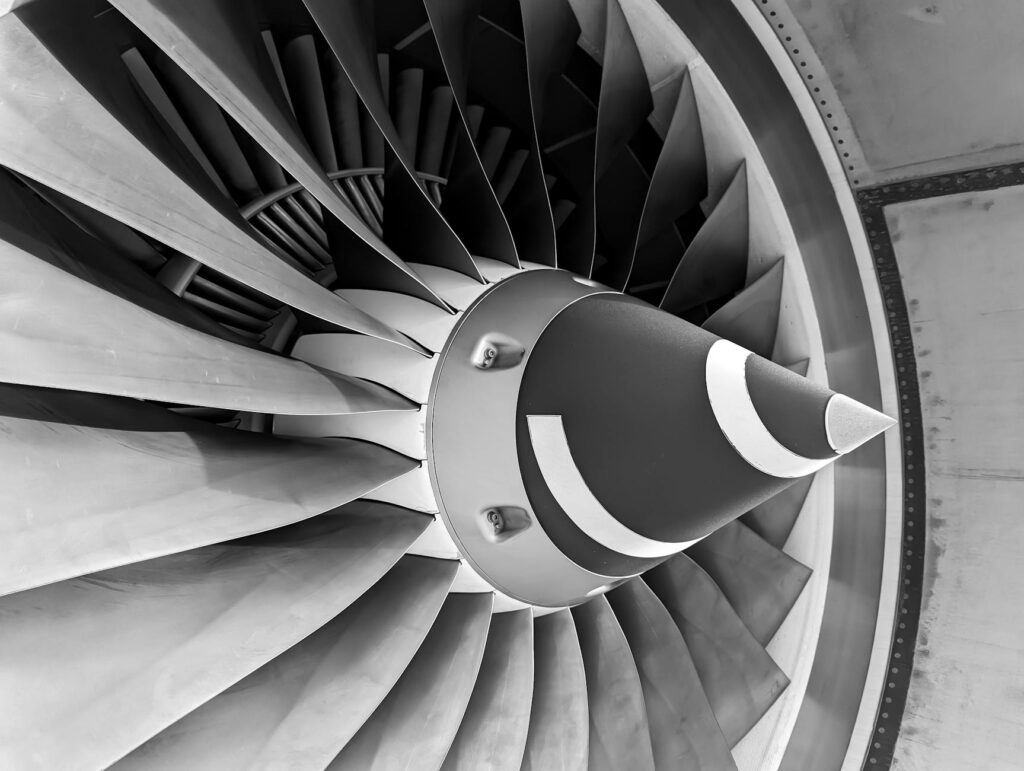
Let’s start with the aircraft itself. Modern commercial jets like the Boeing 737 or Airbus A320 are built with what engineers call redundancy. Every critical system, from hydraulics to electrical power to flight computers, has a backup. And most have a backup to the backup. The engines on a twin-engine aircraft are each independently capable of completing a flight if the other fails. This isn’t theoretical. It happens, and the plane lands safely.
Then there’s maintenance. Before any commercial aircraft pushes back from the gate, it’s been through a series of checks that would make your mechanic jealous. Line checks happen before every single flight. More comprehensive A-checks happen roughly every 400 to 600 flight hours. Major overhauls, known as D-checks, involve essentially disassembling and rebuilding the plane from scratch and can take several weeks. Airlines aren’t cutting corners on this stuff, not when the FAA, EASA, and a dozen other regulatory bodies are watching over their shoulder.
Pilot Training Is Brutally Rigorous
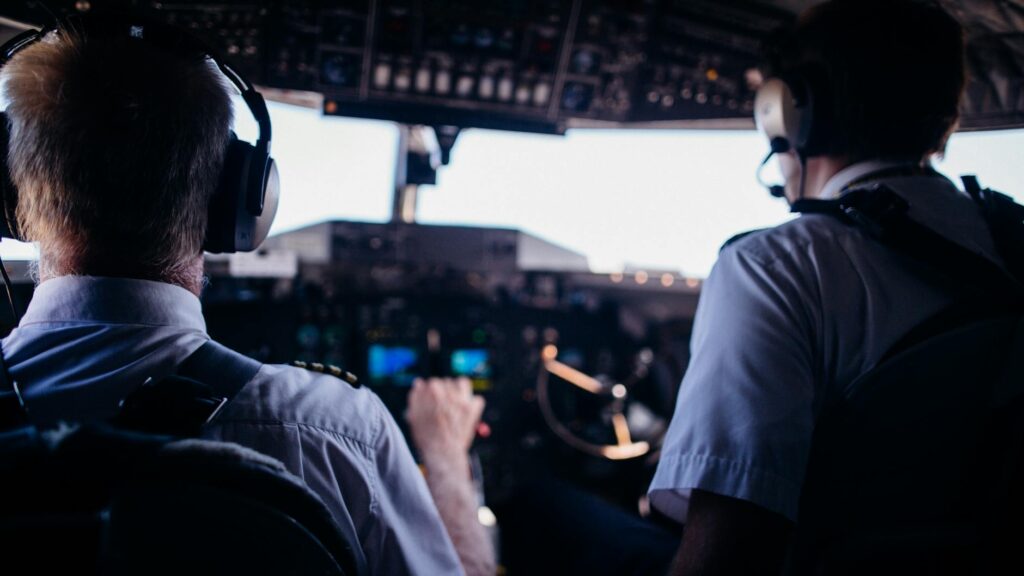
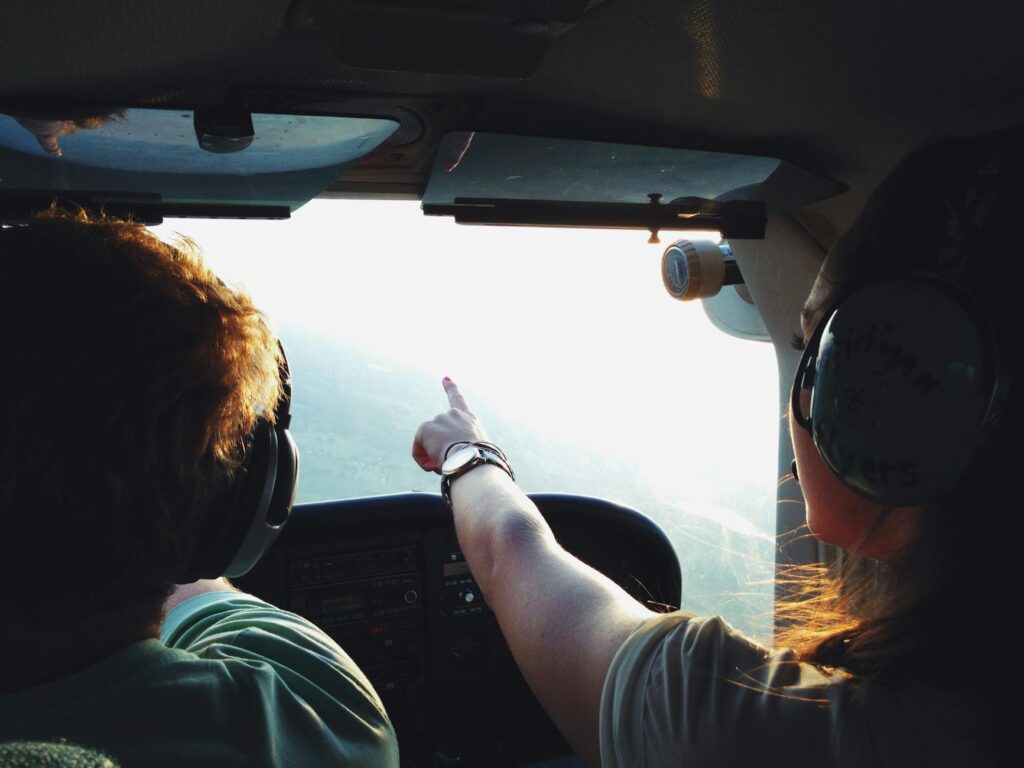
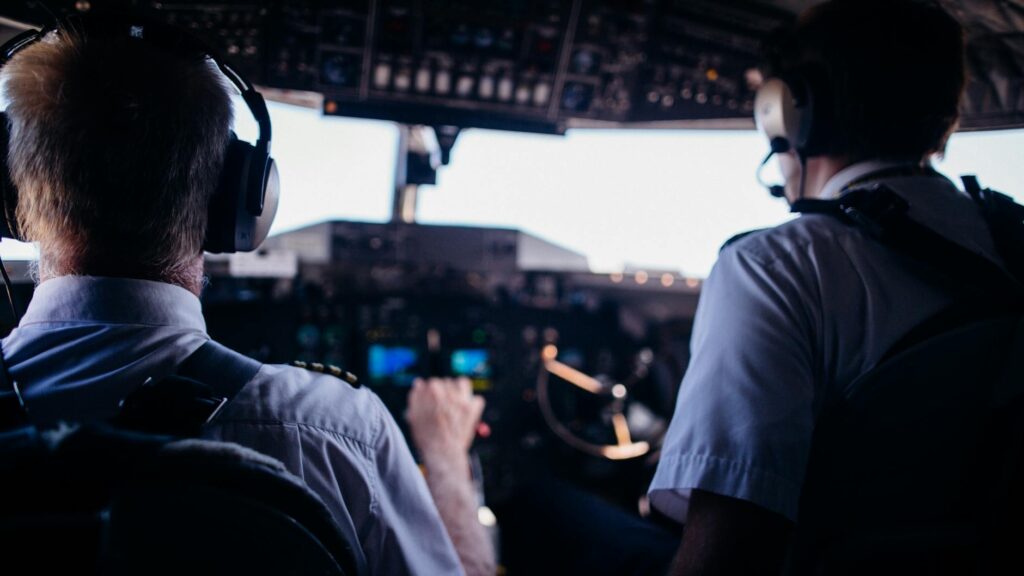
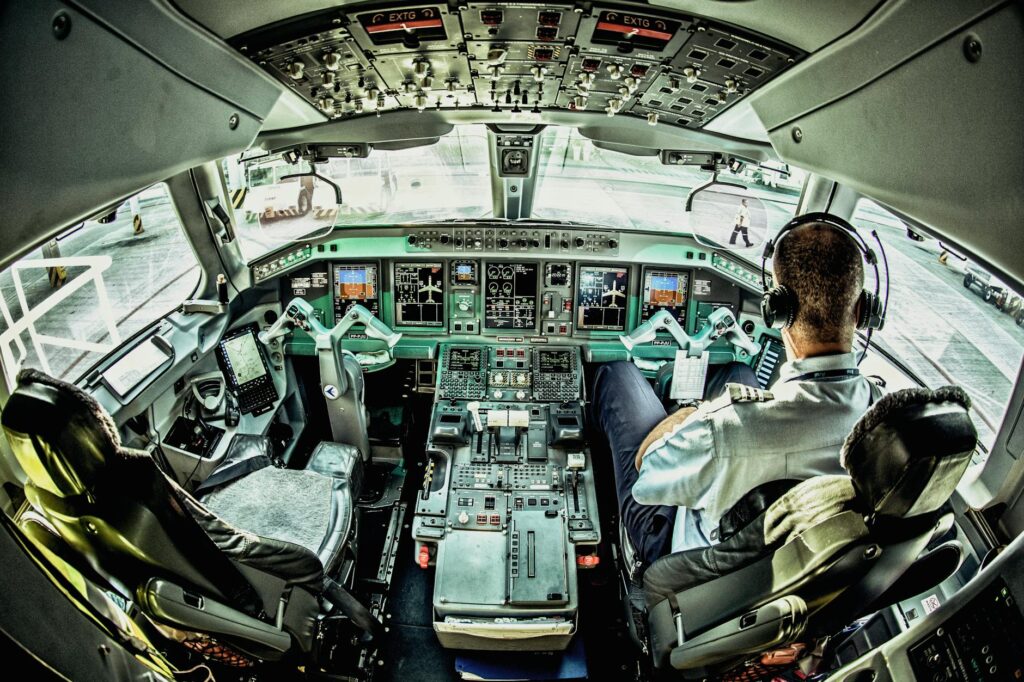
Honestly, I think pilot training is one of the most underrated aspects of aviation safety. People assume pilots just kind of… fly. They don’t realize how much time those crew members have spent in simulators dealing with nightmare scenarios before they ever sit in a real cockpit with passengers.
In the United States, airline first officers must hold an ATP (Airline Transport Pilot) certificate, which requires a minimum of 1,500 flight hours. That’s just the floor. Captains often have several thousand hours before they ever occupy the left seat on a commercial route. And the training doesn’t stop once they’re hired. Pilots undergo recurrent training every six months, which includes full-motion simulator sessions covering engine failures, severe weather, instrument malfunctions, emergency procedures, and more.
The Crew Resource Management training that’s now standard across commercial airlines was developed in direct response to accident investigations that showed most crashes weren’t caused by mechanical failure. They were caused by communication breakdowns in the cockpit. The industry identified the problem and fixed it. That’s what a mature safety culture actually looks like.
Air Traffic Control: The Invisible Layer Nobody Talks About
While pilots get most of the attention, air traffic controllers are doing something equally extraordinary. At any given moment, there are around 45,000 flights in U.S. airspace alone on a busy day. Every one of those aircraft is being tracked, sequenced, and guided by a network of controllers who are coordinating in real time across hundreds of radar facilities.
Controllers go through intense training at the FAA Academy in Oklahoma City before being assigned to a facility. And even then, they’re certified progressively for each specific piece of airspace they work. They don’t just get handed a radar scope and told to figure it out. The whole system is layered with separation standards, conflict alerts, and built-in buffers so that even if a communication gap occurs, there’s time to correct it.
Turbulence Isn’t What You Think It Is
Let’s clear this one up. Turbulence is uncomfortable. Sometimes it’s genuinely alarming. But the plane is not going to fall out of the sky because of it. Commercial aircraft are tested to handle loads far beyond anything encountered in normal or even severe turbulence. The wings flex on purpose. That’s a feature, not a flaw.
The real risk with turbulence is being unbelted and hitting the ceiling. Which is why the seatbelt sign exists. Wear it when it’s on, and turbulence goes from a safety issue to a minor inconvenience.
Fear Is Valid, But So Is the Data
Nobody should feel embarrassed about being nervous on a plane. Fear of flying is incredibly common, and the brain’s threat-detection system doesn’t really care about statistics. But understanding what’s actually happening around you, the engineering, the training, the systems, can genuinely help. Knowledge has a way of quietly shrinking fear.
Aviation didn’t become this safe by accident. It got here through decades of learning from every incident, sharing data across the industry, and continuously raising the bar. That process is still happening right now on flights going on all over the world.
If you’re a student pilot or just an aviation enthusiast who wants to dig deeper into the numbers behind a flight, tools like the Flight Time Calculator on SkyToolbox can help you understand things like great-circle distances and estimated flight times between airports. Sometimes just seeing the math behind a flight makes the whole thing feel a little more real. Try it free and see what’s actually going on up there.